


Orange County Wrongful Death Lawyer
If someone you love died because of another person’s negligence, you may be entitled to compensation. Contact the wrongful death lawyers at Beckerman Anderson today to learn how we can help.
Losing a family member is always devastating. When the death was sudden and caused by someone else’s carelessness or misconduct, the pain can be even harder to bear. In California, certain surviving family members have the legal right to hold the responsible person, company, or organization accountable by filing a wrongful death claim. While no amount of money can make up for the loss of a loved one, a wrongful death claim can help families cope with the financial impact, such as lost income, funeral costs, and the loss of their loved one’s care, guidance, and companionship.
Schedule a Free Consultation
A Team Based on Trust and Communication
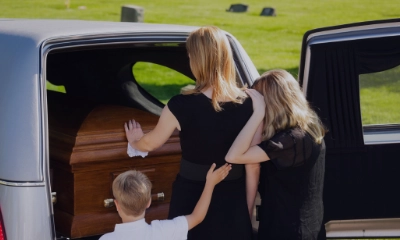
What is Defined as Wrongful Death?
When a person dies because of another person’s or organization’s negligence, misconduct, or malpractice, it’s known as a wrongful death.
Many people assume a wrongful death case is a criminal matter, but it’s actually a civil lawsuit. You may have seen news stories where the person responsible for a death faces both a criminal trial and a wrongful death lawsuit. These are two separate cases with different goals.
A criminal case is brought by the government to punish the person responsible, often with jail or prison time. A wrongful death claim is brought by the family to compensate them for their loss. If the claim succeeds, whether through a settlement or a court verdict, the responsible party, or more often their insurance company, pays monetary damages to the surviving family members.
The two cases also have different standards of proof. A criminal conviction requires proof “beyond a reasonable doubt,” but a wrongful death claim only requires showing that the defendant was more likely than not responsible. That means a family can win a wrongful death case even if no criminal charges were filed, or if the person was found not guilty.

What Are Some Common Causes Of Wrongful Deaths in Orange County?
Wrongful death can happen just about anywhere, including in the workplace, in public spaces and on roadways. The most common situations that result in wrongful death are as follows:
- Auto accidents
- Commercial truck accidents
- Bicycle accidents
- Motorcycle accidents
- Defective or dangerous products
- Premises liability injuries
- Medical malpractice
- Workplace injuries
Can More Than One Person Be Liable for an Orange County Wrongful Death?
Yes. In many wrongful death cases, more than one person or company shares responsibility for the death. That’s one reason it’s important to work with an experienced wrongful death attorney, who can investigate every factor that contributed to the death and identify all the parties who may owe compensation to your family. Here are some common examples:
Truck accidents. The truck driver may be responsible, along with the trucking company that hired, trained, or scheduled them. A company that loaded the cargo improperly or failed to maintain the truck may also share the blame.
Car accidents involving a work vehicle. If the driver was on the job when the crash happened, their employer may be liable along with the driver.
Drunk driving accidents. Along with the drunk driver, a party that served alcohol to an obviously intoxicated minor may also be held responsible in certain situations.
Defective products. When a faulty product causes a death, the manufacturer, the maker of a defective part, and sometimes the seller may all share responsibility.
Medical malpractice. A death caused by a medical error may involve the doctor, nurses, and the hospital or clinic where the care was provided.
Dangerous property or roads. A property owner, property manager, or maintenance company may share responsibility for a fatal hazard on the property, and a government agency may be liable for a dangerous road condition.

Who is Allowed to Sue in a Wrongful Death Case?
California allows a wrongful death claim when someone dies because of another person’s wrongful act or negligence. But who can actually file the lawsuit? California law sets out who is eligible:
The surviving spouse or domestic partner, the children, and the children of any deceased child (the person’s grandchildren)
If there is no spouse, partner, child, or grandchild, the people who would inherit the person’s property under California law, such as their parents or siblings
Certain family members who depended on the person financially, including stepchildren, parents, a “putative spouse” (someone who believed in good faith that they were legally married to the person), and that spouse’s children
The legal guardians of the person who died, in some cases, if the person’s parents are no longer living
A personal representative of the person’s estate may also bring the claim on behalf of the eligible family members.
In most cases, the claim is brought by a close family member, but the rules can be complex. To find out whether you can bring a claim for the loss of your loved one, contact an Orange County wrongful death lawyer at Beckerman Anderson. We’ll listen carefully to your situation and help you understand your options.
What Damages Can Be Recovered in a Wrongful Death Claim?
Families can recover both economic and non-economic damages in a wrongful death claim.
Economic damages are the financial losses that can be documented with bills, pay records, and other paperwork. Common examples include:
- Funeral, burial, and cremation expenses
- The financial support your loved one would have provided over their lifetime
- The value of household services they would have provided, such as childcare, home maintenance, and transportation
- Gifts and other benefits your family would have received
Non-economic damages compensate for losses that don’t come with a receipt, so they can be harder to put a dollar figure on. In a California wrongful death case, these include the loss of your loved one’s:
- Love, companionship, and affection
- Comfort, care, and moral support
- Guidance and training, especially for children who lost a parent
- For a spouse or partner, the loss of the intimate relationship
Related claims on behalf of the estate.
Some losses belong to the person who died rather than the family, such as medical bills from their final injury and wages they lost before they passed away. These are recovered through a separate “survival action,” which is usually filed together with the wrongful death claim. An attorney can make sure both claims are pursued so no part of your family’s loss is overlooked.
We offer free consultations, so it costs nothing to have our experienced Orange County wrongful death attorneys review your family’s situation and explain your options. California generally allows only two years from the date of death to file a wrongful death claim, so don’t wait to get answers. Call the Costa Mesa law offices of Beckerman Anderson today, and let us put our resources, experience, and skill to work for your family.
Survival Action vs. Wrongful Death
A survival action is a separate claim brought by the personal representative of the deceased person’s estate, or by their “successor in interest” if there is no estate. The simplest way to think about it is that it’s the lawsuit the person could have filed themselves if they had survived. Because it covers losses the person suffered before they died, a survival action usually matters most when they lived for some time after the injury.
A survival action typically recovers the medical expenses and lost wages from the period between the injury and death, along with any damage to the person’s property, such as their vehicle. Punitive damages, which may be awarded when the defendant acted with malice, oppression, or fraud, can also be recovered in a survival action. In California, however, survival actions filed on or after January 1, 2026 can no longer recover damages for the person’s pain and suffering.
There are several key differences between a survival action and a wrongful death claim:
A wrongful death claim is brought by eligible family members, such as a spouse, children, or dependents. A survival action is brought by the estate’s personal representative or successor in interest.
A wrongful death claim compensates the family for their own losses, like lost financial support and the loss of their loved one’s companionship. A survival action compensates for the losses the deceased person suffered before death.
Wrongful death compensation goes directly to the family members who bring the claim. Survival action compensation goes to the estate and is distributed according to the person’s will or California inheritance law, sometimes after the estate’s debts are paid.
Wrongful death claims include non-economic damages for the loss of love, companionship, and guidance. Survival actions are limited to economic losses and, in some cases, punitive damages.