


Orange County Pedestrian Accident Lawyer
If you or someone you love has been injured as a pedestrian, you may be entitled to recover compensation for your injuries. Contact the experienced Orange County pedestrian accident lawyers at Beckerman Anderson to see how we can help.
In California, not everyone on our roadways is operating a car or other motor vehicle. Many people regularly walk, jog, run, bike, or ride a skateboard all along our road ways for both transportation and recreation.
Unfortunately, thousands of pedestrians are injured in accidents every year in California.
Schedule a Free Consultation
The personal injury attorneys at Beckerman Anderson help pedestrians who were injured by a driver obtain the rightful compensation they are owed by the negligent person who caused the accident. Even if the driver was uninsured or committed a hit-and-run, we still may be able to obtain compensation from the injured person’s own insurance.
What Are the Most Common Causes of Orange County Pedestrian Accidents?
Pedestrian accidents most often happen at intersections with marked crosswalks, on roads without sidewalks or with narrow shoulders, in parking lots, and when a pedestrian crosses outside a crosswalk. Common risk factors include:
Time of day: Most pedestrian accidents happen when a driver’s visibility is reduced: at dawn and dusk, after dark, or when the sun is in the driver’s eyes.
Drugs and alcohol: Drivers and pedestrians who are under the influence of alcohol or drugs face a much higher risk of being involved in an accident.
Distraction: Any time a driver looks away from the road, whether to reach for something or send a text, the chance of hitting a pedestrian goes up. Pedestrians can be distracted too, by looking at their phones while walking or by wearing headphones that block out important sounds, like a driver’s warning honk.
Poor weather, road conditions, or signage: Rain, fog, and glare make pedestrians harder to see. Roads with narrow shoulders, limited sight lines, no crosswalks, or no signs warning drivers to watch for pedestrians are especially dangerous.
Walking with traffic: Pedestrians who walk in the same direction as traffic, with their backs to oncoming cars, are more likely to be seriously injured than those who walk facing traffic.
A Team Based on Trust and Communication
Pedestrian Accidents Often Involve Severe Injuries
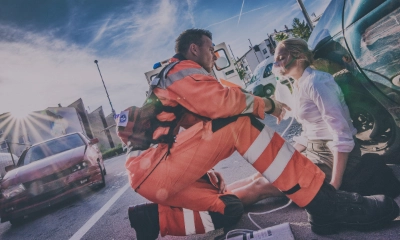
When a pedestrian is hit by a car or truck, their injuries are usually far worse than those of anyone inside the vehicle. Pedestrians have none of the protection that vehicles provide, and unlike cyclists, they don’t wear helmets or other protective gear. That leaves them especially vulnerable in a crash, and their injuries can affect them for weeks, months, or the rest of their lives.
High-speed crashes often cause devastating injuries, but a driver doesn’t have to be speeding to cause serious harm. Even at low speeds, a vehicle can cause life-altering or fatal injuries when it strikes a pedestrian. Many serious pedestrian injuries happen when a driver rolls through a stop sign at an intersection or backs up in a parking lot without seeing someone behind them. At any speed, a vehicle can and does cause traumatic injuries when it hits a person on foot.
Common injuries in pedestrian accidents include:
- Fractured or broken bones
- Head injury including traumatic brain injuries
- Amputation
- Pelvic injuries
- Spinal cord and neck injuries
- Soft tissue injuries and whiplash
- Paralysis
- Torn ligaments
- Contusions/Lacerations
- Avulsion injuries
- Wrongful death

Pedestrian Accident Statistics
Pedestrian accidents are often fatal, and Orange County sees more than its share. Several factors contribute:
A large population and heavy tourism. More than three million people live in Orange County, and tens of millions of visitors arrive each year. Busy destinations like the Anaheim resort district and beach cities such as Newport Beach and Huntington Beach bring heavy foot traffic alongside crowded roads.
Hundreds of victims every year. In 2023 alone, 892 pedestrians were killed or injured in traffic crashes in Orange County, according to the California Office of Traffic Safety.
A nationwide problem. Across the U.S., 7,314 pedestrians were killed and more than 68,000 were injured in traffic crashes in 2023, according to the National Highway Traffic Safety Administration (NHTSA).
Danger away from crosswalks and after dark. NHTSA data shows that 74% of pedestrian deaths happen away from intersections, and 77% happen after dark.
Common Types of Orange County Pedestrian Accidents
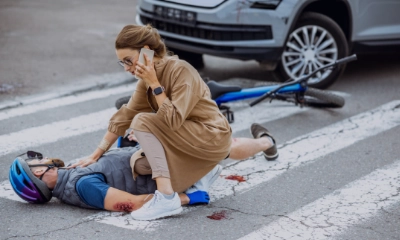
In California, roughly one in four people killed in traffic crashes is a pedestrian. In 2023, pedestrians made up 27% of the state’s traffic deaths, and more than 24% in 2024. That may be surprising, since most people picture car accident victims as drivers or passengers. But almost everyone is a pedestrian at some point in the day.
Even when we drive, we still walk through parking lots, cross streets, and use sidewalks and public walkways to reach our destination. That means nearly everyone faces some risk of being hit by a vehicle while on foot.
The most common types of pedestrian accidents include:
About one in five pedestrian deaths happens at an intersection. In 2023, 17% of pedestrians killed nationwide were struck at intersections, and in California the share was even higher, at 22%. These crashes often happen when a driver turning left or right fails to yield to someone crossing in the crosswalk, or when a driver runs a red light or rolls through a stop sign.
Accidents caused by a failure to yield happen when a driver does not give a pedestrian their legal right of way. Generally speaking, pedestrians have the right of way, this can be true regardless of whether there is a marked crosswalk.
When drivers back out of driveways, parking spaces, or in other scenarios that require them to reverse, they do not have a full view of their surroundings and are more likely to strike a pedestrian.
Most pedestrian deaths happen away from intersections, often when someone crosses mid-block. Drivers may not expect a person to step into the road there, and the pedestrian may misjudge how fast traffic is moving. Even so, drivers still have a legal duty to watch for pedestrians and to take reasonable care to avoid hitting them, wherever they are crossing.
Under California’s Freedom to Walk Act, crossing outside a crosswalk is generally not illegal unless it creates an immediate danger of a collision, so a pedestrian who was hit while crossing mid-block may still have a strong injury claim.
It is not uncommon for a pedestrian to be struck just because they were near the roadway. A driver who is careless or distracted can swerve onto the sidewalk or shoulder and an innocent pedestrian becomes a victim due to nothing more than their proximity to a negligent driver.
A lot of homes and apartment buildings have their mailboxes next to the road. Although this eases the burden on the postal carrier, it also means that, in order to check their mail, pedestrians must stand on or at the very edge of the street, putting them in danger of being struck by a car.
School bus stops are especially dangerous for children and the parents walking them. Families count on drivers to obey the law and stop when a school bus’s red lights are flashing and its stop arm is out. Too many drivers ignore those warnings and pass the stopped bus anyway, sometimes just as a child is stepping into the street.
In California, drivers in both directions must stop for a school bus with flashing red lights and remain stopped until the lights turn off (California Vehicle Code § 22454). The only exception is a divided highway or multilane road separated by a barrier.
Residential streets often bring sudden, unexpected movement. Children may dart into the road after a ball or a pet, and parked delivery trucks and service vans can block a driver’s view of someone about to cross. Drivers who speed through neighborhoods or don’t watch for these hazards may not have time to stop, and a pedestrian can be seriously injured as a result.
How to get Compensation if You Were Injured in a Pedestrian Accident
The first step in any pedestrian accident case is figuring out who was responsible and where compensation can come from. In most cases, the injured pedestrian, or their family if the accident was fatal, seeks compensation from the driver and the driver’s insurance company.
Sometimes, though, the driver isn’t known right away. When that happens, it’s important to start investigating as soon as possible. Witnesses move on and security footage gets recorded over, often within days, so a quick search of the area for witnesses and nearby cameras can make the difference in identifying the driver. A thorough investigation takes time and resources, which is one reason it helps to contact a lawyer as soon as possible after an accident.
If the driver fled the scene and can’t be found, you may still be able to recover compensation through your own uninsured motorist (UM) coverage, or through the policy of a family member you live with. This coverage can apply even though you were on foot, not in a car. A lawyer can review the policies involved and help you understand your options.
In California, a hit-and-run uninsured motorist claim generally requires that the accident be reported to the police within 24 hours and to your insurance company within 30 days, so prompt action is critical.
Who Can Be Found At Fault For Orange County Pedestrian Accidents?
In California, pedestrians have the right of way in any marked crosswalk and in any unmarked crosswalk at an intersection, meaning wherever the sidewalks meet across the street, even without painted lines. That doesn’t mean pedestrians always have the right of way, as many people assume. A pedestrian shouldn’t step off the curb directly into the path of a car that is too close to stop. But even when a pedestrian doesn’t have the right of way, drivers are still required to use reasonable care to avoid hitting anyone in the road.
After a pedestrian accident, police, insurance companies, and attorneys work to determine who is responsible. Depending on the circumstances, you may be able to recover compensation from:
The driver of the vehicle that hit the pedestrian and the owner of that vehicle can be liable.
If the driver was working when the accident happened, such as making deliveries, driving a company truck, or running a work errand, their employer may be legally responsible for the pedestrian’s injuries. In California, employers are generally liable for accidents their employees cause while on the job. An employer may also be directly at fault for hiring an unsafe driver, failing to train them properly, or letting them drive despite knowing about drinking, drug use, or a poor driving record.
A poorly designed or badly maintained road can be dangerous for pedestrians and drivers alike. The city, county, or state agency responsible for a road, and in some cases the engineers who designed it, may be held liable when unsafe conditions contribute to an accident. Examples include crosswalks placed where drivers can’t see them in time, missing or broken traffic signals, faded crosswalk markings, signs that were never installed or replaced, and inadequate street lighting.
Claims against a government agency in California generally must be filed within six months of the accident, so it’s important to act quickly.
When a pedestrian is hit in a parking lot, the owner or manager of the property may share responsibility if the lot wasn’t kept reasonably safe. Common problems include poor or broken lighting, missing stop signs or speed bumps, faded crosswalks and lane markings, confusing traffic flow, and landscaping or signs that block drivers’ view of people walking. The driver who hit the pedestrian is usually still responsible as well, so a parking lot accident can involve more than one source of compensation.
Section 1714 of the California Civil Code states that a parent, guardian, or another adult who knowingly furnishes alcoholic beverages at his or her residence to a person whom he or she knows, or should have known, to be under 21 years of age, in which case, notwithstanding subdivision (b), the furnishing of the alcoholic beverage may be found to be the proximate cause of resulting injuries or death. A claim under this subdivision may be brought by, or on behalf of, the person under 21 years of age or by a person who was harmed by the person under 21 years of age.
Mechanical failures can cause pedestrian accidents. Faulty brakes, sudden acceleration, steering problems, or a defective part can leave a driver unable to stop. When a defect is to blame, the manufacturer of the vehicle or part may be held responsible for the pedestrian’s injuries. In some cases, a repair shop that did faulty work, or a vehicle owner who ignored a known problem or a recall, may also share responsibility.
What IF THE INSURANCE COMPANY DENIES MY CLAIM?
Insurance adjusters often try to deny pedestrian claims, or pay far less than they’re worth, by arguing that the pedestrian was to blame.
Pedestrians do have a responsibility to follow traffic laws and act reasonably. It’s always smart to look out for your own safety: look both ways before crossing, use crosswalks and walk signals when you can, and wear bright or reflective clothing at night. But that’s not the end of the story.
Even if an adjuster claims you did something careless, the driver isn’t automatically off the hook. Drivers must yield to pedestrians in crosswalks and use reasonable care to avoid hitting anyone in the road, wherever they are. And under California’s comparative fault rules, you can still recover compensation even if you were partly at fault. Your award is reduced by your share of the blame, but it isn’t eliminated.
So if an insurance company tells you it won’t pay because the accident was your fault, don’t take that as the final word. The insurer is looking out for its own bottom line. An experienced pedestrian accident attorney can review what really happened and fight for the compensation you deserve.
Most importantly, don’t sign anything or give a recorded statement to an insurance company before speaking with an attorney.
Contact Beckerman Anderson right now for your free consultation to see how we can help resolve your pedestrian accident and get you the settlement you deserve
With our experience protecting the rights of individuals harmed by the negligence and misconduct of others, Beckerman Anderson, APC will fight for you. Our attorneys have collected millions of dollars for injured victims. If you’ve been injured and need the help of an accident attorney to get you the compensation you deserve, don’t wait another minute. Call 949-409-4299 to speak with our Orange County pedestrian accident lawyer today.